Disclosure
this post contain the affiliate links from best websites of your interest if you made purchase through our link we will get commission thanks .
Introduction
Whether you are a seasoned backpacker or a first-time flyer, the thrill of exploring a new city shouldn’t be overshadowed by the fear of being targeted. Unfortunately, in 2026, tourist traps and travel scams have evolved, becoming more subtle and harder to spot.
While most locals you meet will be genuine and helpful, a small number of professional scammers rely on your unfamiliarity with the area to lift your wallet or overcharge you for basic services. The good news? Most travel crimes are crimes of opportunity. By learning the “red flags” and adopting a few simple travel safety tips, you can make yourself a “hard target” and focus on what really matters: making memories.
In this guide, we’ll break down the 7 common travel scams currently trending worldwide and provide a masterclass in pickpocket prevention to keep your belongings—and your peace of mind—perfectly intact.
7 Common Travel Scams Every Traveler Should Know
1. The “Broken” Taxi Meter Trick
This is the oldest play in the book. You hop in, and the driver tells you the meter is “broken,” quoting a flat rate that’s quadruple the actual price.
The Pro Move: Always insist on the meter before the car moves. If they refuse, get out. In 2026, your best bet is using verified apps like Uber or Grab where the price is fixed and tracked via GPS.
2. The Friendship Bracelet “Gift”
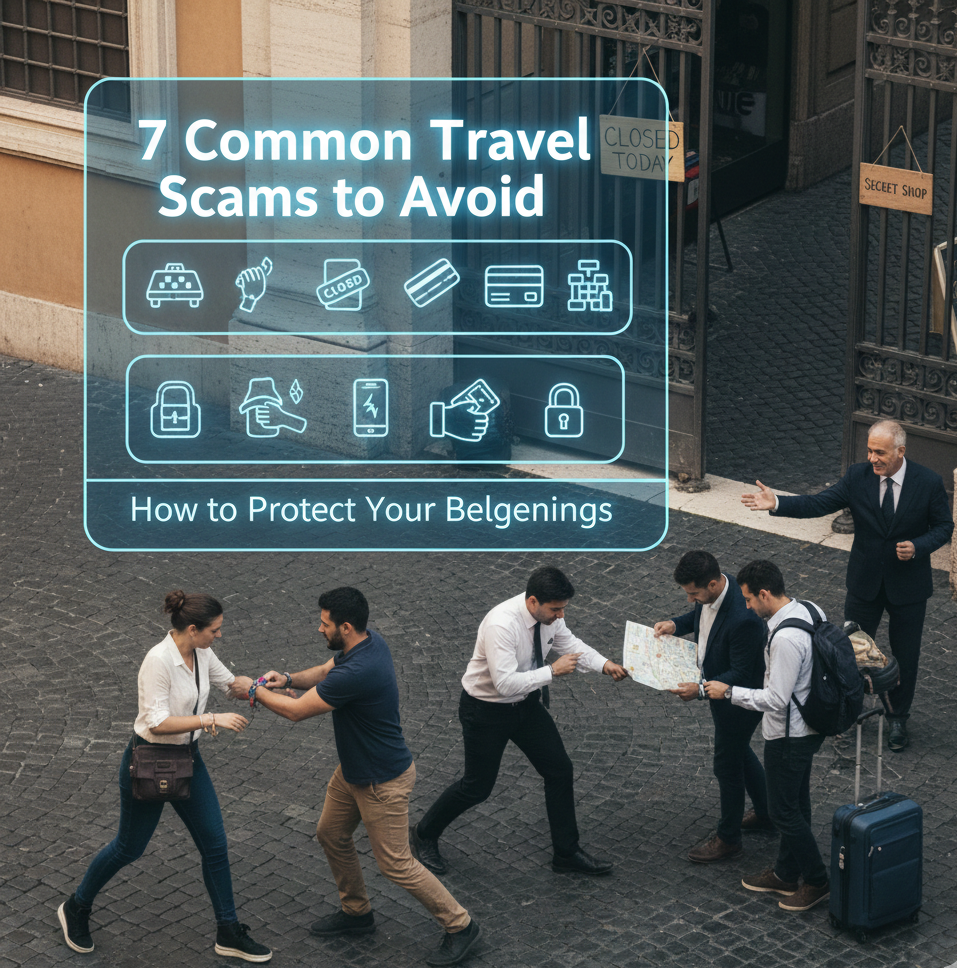
I’ve seen this play out in front of the Duomo in Milan and the Sacré-Cœur in Paris. A “friendly” local starts a conversation and ties a cord around your wrist. Suddenly, it’s a “custom handmade gift” that costs €20.
The Pro Move: Keep your hands in your pockets when walking through high-traffic tourist plazas. A firm “No” and maintaining your personal space is key.
3. The “Closed” Landmark Deception
Common in Bangkok and Istanbul, a well-dressed local will inform you that the temple or museum you’re heading to is closed for a “private ceremony.” They then offer to take you to a “better” spot—usually a rug or jewelry shop where you’ll face a high-pressure sales pitch.
The Pro Move: Trust, but verify. Walk to the front gate yourself. 99% of the time, the landmark is wide open.
4. The Distraction “Spill”
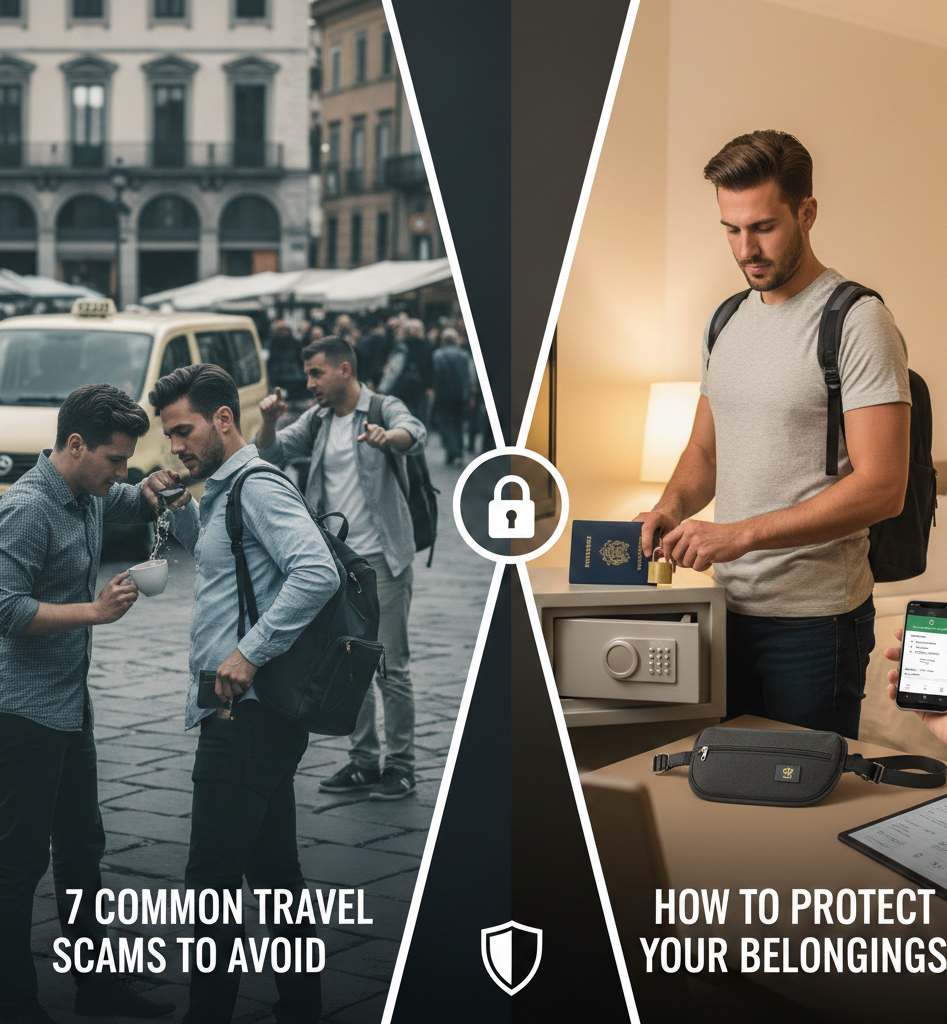
This one is a classic pickpocket move. Someone “accidentally” spills ketchup, coffee, or bird droppings on your shoulder. While they profusely apologize and try to wipe it off, their partner is lifting your wallet from your bag.
The Pro Move: If anyone touches you or your clothing unexpectedly, ignore the mess and move to a secure area (like a hotel lobby or bank) before checking your belongings.
5. The Fake “Front Desk” Call
You’re tired in your hotel room when the phone rings. It’s the “front desk” claiming your credit card was declined and asking you to “verify” the numbers.
The Pro Move: Never give financial info over a hotel phone. Tell them you’ll come down to the lobby in person. Real hotel staff will never ask for your CVV over the internal line.
6. The “Free” Wi-Fi Honeypot
Hackers set up fake hotspots in airports labeled “Free_Airport_WiFi_Guest.” Once you log in, they can scrape your passwords and banking data.
The Pro Move: Use a VPN (Virtual Private Network) at all times. If you don’t have one, stick to your cellular data or an eSIM.
7. The Rental Damage Scam
Whether it’s a scooter in Bali or a car in Sicily, the owner might point to pre-existing scratches when you return the vehicle and demand a massive “repair fee.”
The Pro Move: Take a 360-degree video of the vehicle with the owner in the frame before you drive off. Point out every single dent and ensure it’s noted on the contract.
Proactive Precautionary Measures for Smart Travelers
While knowing the scams is vital, your best defense is a set of ironclad habits. Here is how to stay two steps ahead of any “tourist trap.”
1. Digital & Document Safety
The “Double Digital” Backup: Take clear photos of your passport, visa, travel insurance, and vaccination records. Store them in a password-protected cloud folder (like Google Drive or iCloud) and email them to yourself.
Register with Your Embassy: Many countries (like the U.S. with the STEP program) allow you to register your trip. If a natural disaster or civil unrest occurs, your government knows where you are and how to reach you.
Offline Maps: Download the offline version of your destination on Google Maps. This prevents you from looking lost or “stuck” if you lose signal, which is when scammers often pounce.
2. Financial Security Protocols
The “Two-Card” Rule: Never carry all your credit cards and cash in one wallet. Keep one “daily” card on you and leave a backup card locked in your hotel safe.
Set Transaction Alerts: Enable real-time push notifications on your banking app. If a “skimmer” steals your card info, you’ll see the fraudulent charge the second it happens and can freeze the card immediately.
Use Bank-Attached ATMs: Avoid standalone ATMs in dark alleys or convenience stores. Use machines located inside a bank lobby, as they are much harder for scammers to fit with “skimming” devices.
3. Physical Protection & Gear
Choose the Right Lock: If you’re staying in a hostel or using luggage storage, bring a high-quality combination lock. Avoid key-based locks, as losing the tiny key can ruin your day.
Wear a “Decoy” Ring: If you are traveling to an area known for high-value muggings, leave your expensive jewelry at home. A simple $10 silicone band or plain wedding ring is a safer alternative.
The Door Wedge Secret: For solo travelers, carry a small rubber door wedge. Placing it under your hotel or Airbnb door from the inside provides an extra layer of physical security that electronic locks can’t match.
4. Situational Awareness (The “Vibe” Check)
Walk with Purpose: Even if you are hopelessly lost, walk like you know exactly where you’re going. If you need to check your map, step inside a cafe or a shop to do it.
Dress to Blend In: Looking like a “wealthy tourist” makes you a target. Research the local dress code. If locals don’t wear fanny packs or bright tropical shirts, you shouldn’t either.
Learn “Safety” Phrases: Memorize how to say “No, thank you,” “Help,” and “Police” in the local language. Often, just showing that you aren’t a “clueless” foreigner is enough to make a scammer move on to an easier target.
How to Protect Your Belongings: Travel Safety 101
Knowing the scams is half the battle; the other half is your gear setup. Here is how to stay “theft-proof” while exploring.
Invest in Anti-Theft Gear
-
Slash-Proof Bags: Brands like Pacsafe or Travelon use steel mesh in their straps so thieves can’t cut your bag off your shoulder.
-
RFID-Blocking Wallets: Stop digital pickpockets from skimming your credit card info through your pockets.
The “Front-Pocket” Rule
Never, ever put your phone or wallet in your back pocket. It’s an open invitation. Use your front pockets or a cross-body bag that stays in front of your torso.
Use the “Decoy” Method
Carry a “dummy” wallet with a few expired cards and a small amount of cash. If you are ever confronted, you can hand that over while your real cash and passport stay hidden in a money belt under your clothes.
Digital Safety Nets
-
AirTags: Drop an AirTag in your checked luggage and your daypack.
-
Cloud Backup: Set your phone to back up photos to Google Photos or iCloud every night. If the hardware is stolen, the memories aren’t.
Quick Tip: Before you leave, take a photo of your passport and email it to yourself. Having a digital copy makes the replacement process at an embassy much faster.