having just returned from an incredible journey across Japan, clutching my well-worn Japan Rail Pass and brimming with stories. This guide isn’t just about if the pass is worth it; it’s about the experience of discovering Japan by rail.
Introduction: My Love Affair with Japanese Trains
Hello, fellow travel enthusiasts! your guide is here, just back from another incredible adventure. This time, I embarked on a journey across the land of the rising sun, armed with one of the most debated travel tools: the Japan Rail Pass.
For years, this pass has been the holy grail for budget-conscious explorers wanting to experience Japan’s famous Shinkansen and extensive rail network. But with recent price hikes, a crucial question looms: Is the Japan Rail Pass still worth it for your trip?
Join me as I pull back the curtain on my recent experience, from purchasing the pass to my final bullet train ride.
Chapter 1: Deciphering the JR Pass – My Pre-Trip Deep Dive
What Exactly Is the Japan Rail Pass?
A special ticket for foreign tourists offering unlimited travel on JR lines (Shinkansen, local trains, buses, and even some ferries).
Types: Ordinary vs. Green Car (First Class), 7, 14, or 21 days.
The Big Question: Ordinary vs. Green Car?
My Experience: I opted for the Ordinary Pass. While Green Car offers more space, I found the standard cars incredibly comfortable, clean, and rarely overly crowded outside of peak hours. Plus, the savings were significant!
Where and How to Buy the Japan Rail Pass:
Crucial Tip: Buy online before you arrive in Japan! It’s generally cheaper and more convenient than purchasing inside Japan. (Mention official JR Pass website or trusted resellers).
Receiving the Exchange Order: What it looks like and what to do with it.
Activating Your Pass in Japan:
My seamless experience at Narita Airport (or another major station like Tokyo Station).
The importance of reserving your first few seats (especially if traveling during peak season or holidays).
Chapter 2: My First Taste of the Shinkansen – Beyond Just Speed
The Iconic Shinkansen Experience:
That moment you step onto a bullet train for the first time – the hushed efficiency, the pristine interior, the almost silent glide out of the station.
My first destination: Kyoto! The journey itself became part of the adventure.
Reserving Seats vs. Non-Reserved Cars:
My Strategy: For longer journeys or specific travel times, I always reserved a seat. It’s free with the JR Pass and provides peace of mind.
When non-reserved cars are okay (shorter trips, off-peak).
A small note on avoiding “scams”: there are no real “scams” but sometimes confusion. Be clear when reserving, check your ticket, and don’t fall for unofficial “JR Pass resellers” in Japan.
Navigating Japanese Train Stations:
A surprisingly straightforward experience thanks to clear signage (often in English).
The dedicated JR Pass gates (don’t use the IC card gates!).
Chapter 3: The People You Meet & The Views You See
A Melting Pot on Rails:
Fellow travelers: Backpackers, families, local commuters, businesspeople.
Brief, polite interactions; the quiet respect in Japanese public spaces.
Observing local life through the window and on the platforms.
Window Seat Wonders: Japan Unveiled:
From bustling cityscapes to serene rural landscapes.
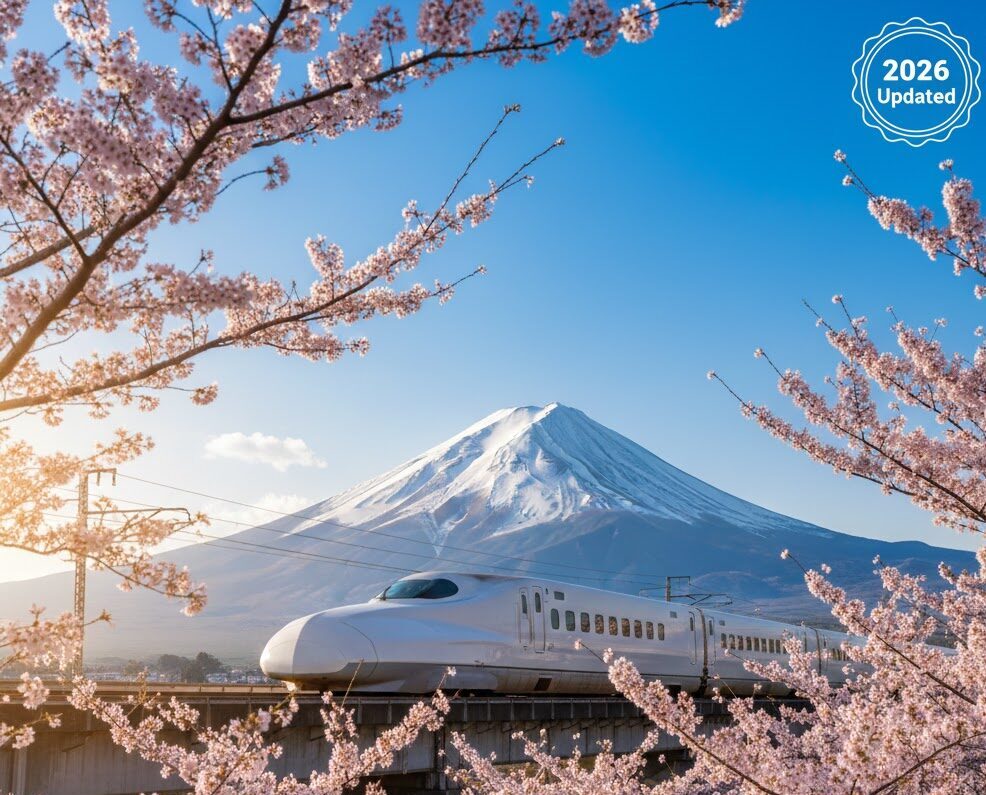
Mount Fuji making its grand appearance (a must-see!).
Coastal views along the Pacific and Sea of Japan.
The seasonal beauty: Cherry blossoms in spring, vibrant greens in summer, fiery reds in autumn, snow-dusted villages in winter.
My Favorite View: Describe a specific, memorable vista you saw. (e.g., “The tranquil rice paddies reflecting the sky on the way to Kanazawa”).
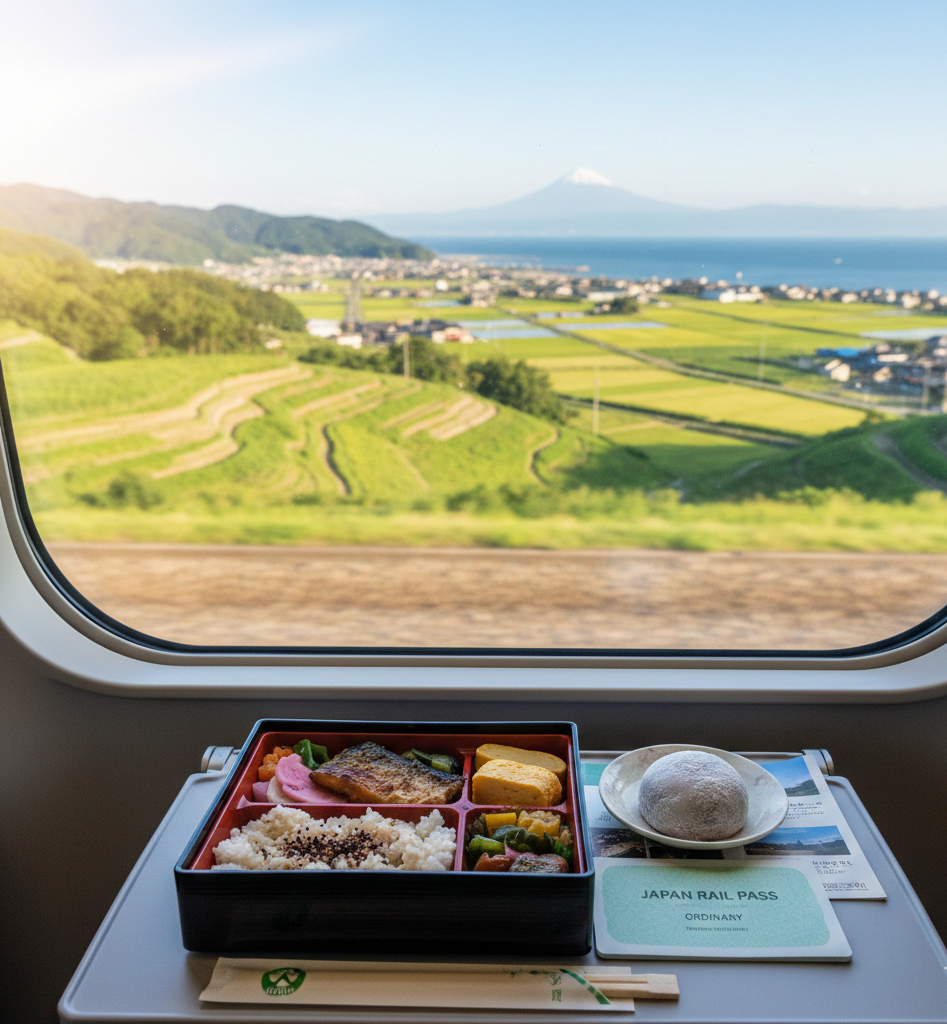
The Joys of Ekiben & Train Snacks:
The delightful ritual of buying a unique bento box at the station.
My personal recommendations for train snacks (Pocky, green tea, local treats).
Chapter 4: The JR Pass – My Route, My Savings, My Verdict
My Itinerary (and why the JR Pass was perfect/not perfect for it):
Example Route: Tokyo -> Kyoto -> Osaka -> Hiroshima -> Miyajima -> Tokyo.
List key journeys and their individual costs if purchased separately.
JR Pass cost vs. individual ticket costs = My Actual Savings.
Is the Japan Rail Pass Still Worth It in 2024/2025?
The New Reality of Price Hikes: Acknowledge the significant increase.
When it IS Worth It:
Extensive multi-city itineraries (e.g., Tokyo to Kyoto, Osaka, Hiroshima, Kanazawa, etc.).
Travelers prioritizing convenience and flexibility.
Those who want the peace of mind of unlimited travel.
When it MIGHT NOT Be Worth It:
Only staying in one region (e.g., just Tokyo and a day trip).
Travelers prioritizing the absolute cheapest option, even if it means slower local trains or buses.
Short trips (e.g., 5-day trip might not justify a 7-day pass).
Alternative Transportation Options (Briefly Mention):
Regional passes (e.g., JR Kansai Area Pass).
Individual Shinkansen tickets.
Buses.
Conclusion: My Enduring Recommendation
The Japan Rail Pass transformed my journey from a series of stressful logistics into a seamless, enjoyable adventure. Despite the price adjustments, for the right type of traveler, it remains an invaluable tool.
It’s more than just a ticket; it’s your key to unlocking the diverse beauty and incredible efficiency of Japan’s world-class rail system.
My Verdict: If your itinerary includes multiple long-distance journeys across different regions of Japan, the JR Pass is still absolutely worth it for the convenience, flexibility, and overall experience. For shorter or single-region trips, do your math carefully!
Happy travels, and may your Japanese rail adventures be as incredible as mine!
The 2026 changes and their "side effects" for travelers.(JR Pass)
1. The 70% Price Surge: The “New Normal”
The biggest change is the permanent price hike that took effect in late 2023 and has solidified in 2026.
7-Day Pass: Jumped from ¥29,650 to ¥50,000 (~$330).
14-Day Pass: Now ¥80,000 (~$530).
21-Day Pass: Now ¥100,000 (~$660).
The Side Effect:
The “Golden Route” (Tokyo → Kyoto → Osaka → Tokyo) used to be the benchmark for the JR Pass. In 2026, this route alone will actually LOSE you money. Buying individual tickets for a Tokyo-Kyoto round trip costs roughly ¥28,000, meaning you’d be overpaying by ¥22,000 if you bought the pass just for that journey.
2. The “Nozomi” Upgrade Fee
Historically, JR Pass holders were banned from the Nozomi and Mizuho (the fastest bullet trains). In 2026, you can ride them, but there is a catch.
The Change: You must purchase a special “Nozomi/Mizuho Ticket” for each leg.
The Cost: A one-way supplement from Tokyo to Kyoto/Osaka costs approximately ¥4,960.
The Side Effect:
Since the Hikari and Sakura trains (which are free with the pass) only take about 15–20 minutes longer, most travelers find the upgrade fee not worth it. The “side effect” here is extra confusion at ticket machines—many travelers accidentally board the Nozomi and face fines or stress if they haven’t paid the surcharge.
3. Regional Pass Revolution
Because the national pass is now so expensive, JR East and JR West have overhauled their regional offerings as of March 2026.
New JR East Pass: A consolidated pass covering Tohoku, Nagano, and Niigata (5-day for ¥35,000; 10-day for ¥50,000).
Hokuriku Arch Pass: Expanded in 2026 to include more of the “Japan Alps” region (¥35,000 for 7 days).
The Side Effect:
Travelers are moving away from the “Whole Japan” pass. The side effect is a surge in popularity for secondary cities like Kanazawa, Sendai, and Niigata, as travelers look for regions where smaller, cheaper passes still provide massive value.
4. Digital Pickup & Passport Readers
As of April 1, 2026, the physical exchange process has finally modernized for those who buy through the official JR website.
The Change: You can now collect your pass at designated ticket vending machines equipped with passport readers at major hubs like Tokyo, Shinjuku, and Narita/Haneda airports.
The Side Effect:
While this kills the infamous 2-hour “Green Window” queues, there is a technical side effect: This only works if you buy via the official site. If you buy a cheaper “MCO voucher” from a third-party agent (like Klook or JRPass.com), you must still wait in line at a manual counter.
Summary: Is It Still Worth It?
| Scenario | Worth It? | Recommendation |
| Tokyo → Kyoto → Osaka | NO | Buy individual tickets or use an IC card. |
| Tokyo → Hiroshima → Kyushu | YES | The long distance justifies the ¥50,000. |
| One Region Only (e.g. Tohoku) | NO | Use a Regional Pass (approx. ¥20k–35k). |
| The “Go Everywhere” Explorer | YES | The flexibility of “hop-on, hop-off” is still unmatched. |