I remember sitting on a plastic stool in the middle of a monsoon downpour in Manila, my “waterproof” backpack soaked through, staring at a Grab app that insisted my 3-kilometer ride would take 90 minutes. In that moment, the glossy Instagram reels of turquoise lagoons in El Nido felt like a different planet.
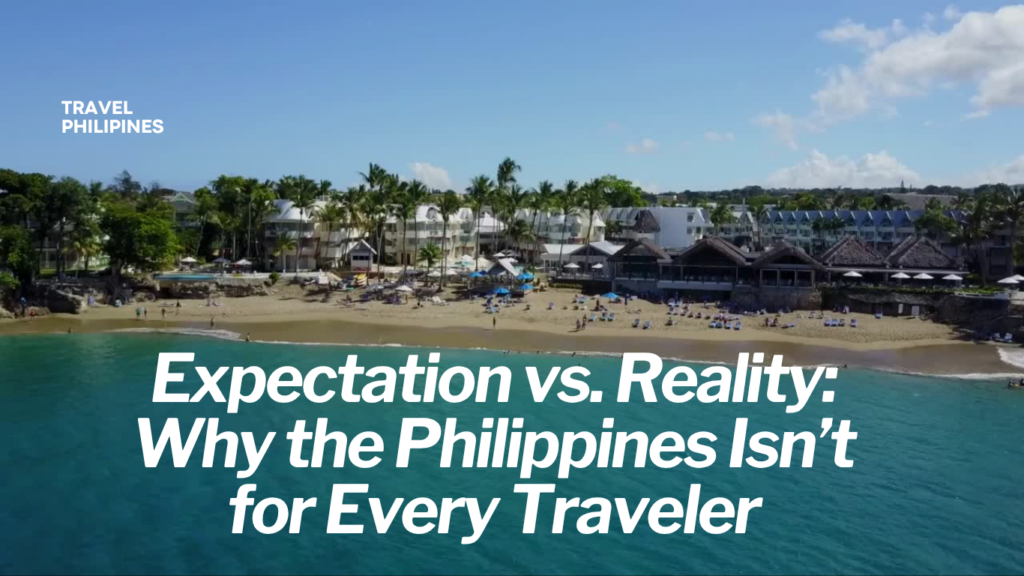
The Philippines is often sold as a flawless tropical Eden. And don’t get me wrong—it is breathtaking. But after spending months navigating the 7,641 islands, I’ve realized why some travelers leave feeling more frustrated than refreshed.
If you’re planning a trip, here is the “human” reality of the archipelago that the brochures won’t tell you.
The Infrastructure "Hustle"
Expectation: Seamlessly hopping from one white-sand beach to the next.
Reality: A logistical marathon.
In the Philippines, you don’t just “go” somewhere; you negotiate with the elements. To get to those famous lagoons, I’ve endured 6-hour van rides on winding roads, delayed ferries, and propeller planes that get cancelled the moment a cloud looks too dark.
The Lesson: If you are the type of traveler who needs a strict schedule or “German-style” transit efficiency, the Philippines will break your heart. You have to learn to embrace “Filipino Time”—which essentially means it happens when it happens.
The Connectivity Crisis
Expectation: Working from a hammock with a coconut in hand.
Reality: Wandering around a village holding your phone in the air searching for a single bar of LTE.
As a digital nomad, I learned this the hard way. I once had a high-stakes Zoom call while perched on a concrete wall behind a sari-sari store because it was the only “hotspot” in the area. While Starlink is changing things, much of the country still suffers from “dead zones.”
The Lesson: This isn’t the place for a high-pressure work retreat. It’s the place to unplug. If your happiness depends on high-speed fiber, you might find yourself more stressed than relaxed.
.
The Cost of "Paradise"
Expectation: Southeast Asian “budget” prices like Thailand or Vietnam.
Reality: Logistics make things surprisingly expensive.
Because everything (fuel, food, beer) has to be shipped between islands, the costs add up. I was shocked to find that a mediocre beachfront room in a popular spot like Siargao cost double what a luxury villa in Bali would.
The Lesson: The Philippines is a premium destination disguised as a budget one. To see the best spots, you need a healthy “contingency fund.”
Reality: A country struggling with its own popularity.
It broke my heart to see plastic bottles floating in the “Secret Lagoon” or to visit a world-famous beach only to be surrounded by 50 other boats pumping out diesel fumes. The “Reality” is that the Philippines is a developing nation trying to balance a massive tourism boom with environmental protection.
I’ll be honest: I loved my time there. But I loved it because I stopped expecting it to be “easy.”
The Philippines isn’t for the traveler who wants a sanitized, predictable vacation. It’s for the traveler who doesn’t mind getting a little muddy, waiting two hours for a bus, and eating at a roadside stall because the “resort” restaurant is closed.
If you can trade your need for control for a bit of wonder, the reality is actually better than the expectation. But if you hate the heat, the delays, and the chaos? You might be one of those tourists who leaves unhappy.